Planning Great Migration photography in the Masai Mara? Here's the best time for river crossings, light, and big cats — month by month, with field-tested tips.
The Great Migration is the single most photographed wildlife event on earth, and the
Masai Mara is where it reaches its dramatic peak. But turning up with a camera isn't enough. The difference between a once-in-a-lifetime river crossing and a week of empty grassland comes down to one thing: timing. This guide breaks down exactly when to be in the Mara, what to expect month by month, and how to position yourself for the shots that matter.
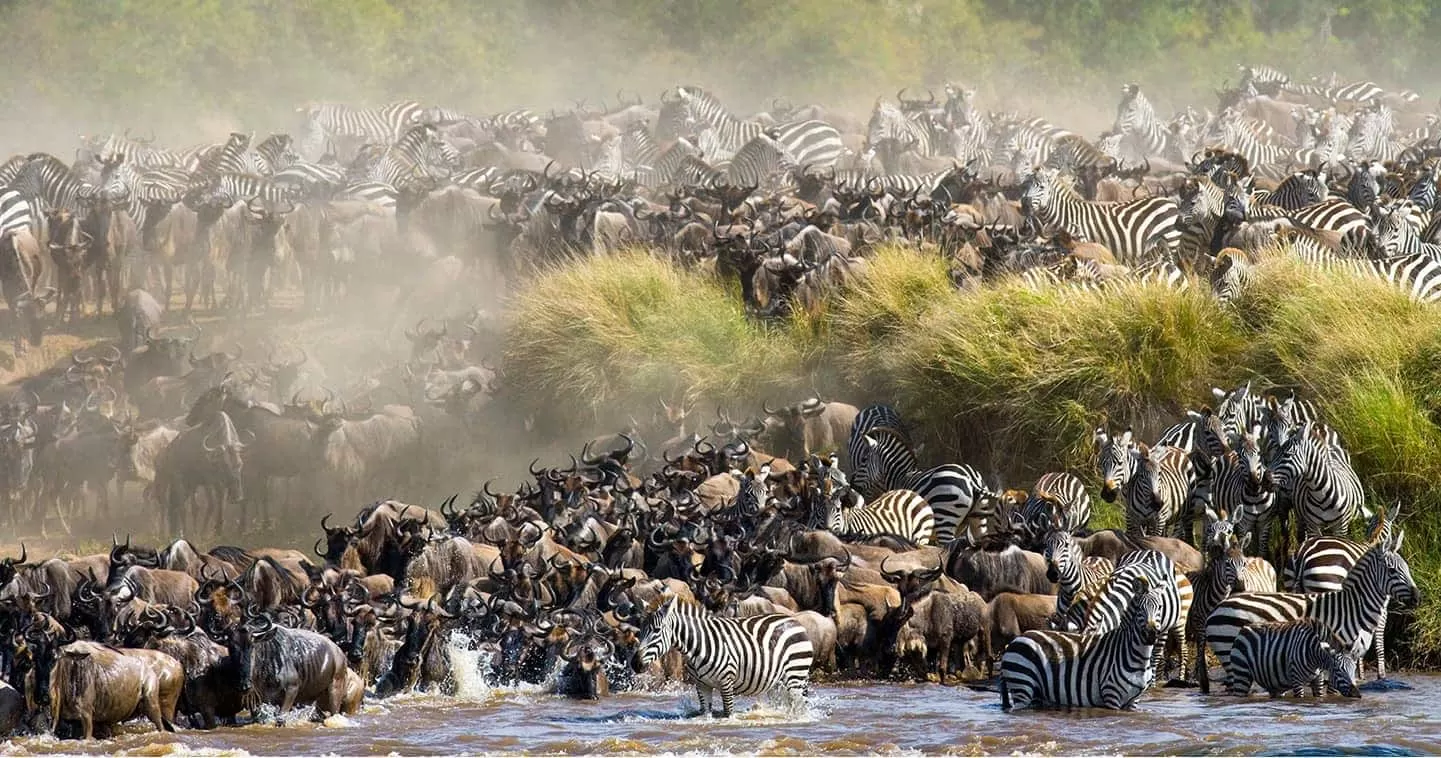
If you only remember one sentence, make it this: for the river crossings, aim for late July through October. That's the window when over a million wildebeest, zebra, and gazelle push north from the Serengeti into the Masai Mara, and the Mara River becomes the stage for the most explosive predator-prey drama in Africa.
Why the Masai Mara, and why timing is everything
The migration is a year-round loop across the Serengeti-Mara ecosystem. The herds are always moving, chasing rain and fresh grass in a giant clockwise circuit. What changes is where the action is. For a photographer, "the migration" really means being in the right part of that loop at the right time — and the Masai Mara's slice of the calendar is the river-crossing season, when the herds gather on the banks and gamble everything on a crossing.
Photography freezes what the heart refuses to forget.
This is also when the Mara's famous big cats are at their most active. Lion prides, cheetah, and leopard all shadow the herds, and the sheer density of prey means predator sightings that would take days elsewhere can happen before breakfast. If you want the Big Five and the migration in one frame of your trip, this is the season.
Month by month: when to go
July — The vanguard of the migration reaches the Mara. Early crossings begin, though they can be unpredictable. Fewer vehicles than peak season, so if you value space and patience over guaranteed density, this is a quiet-luxury window.
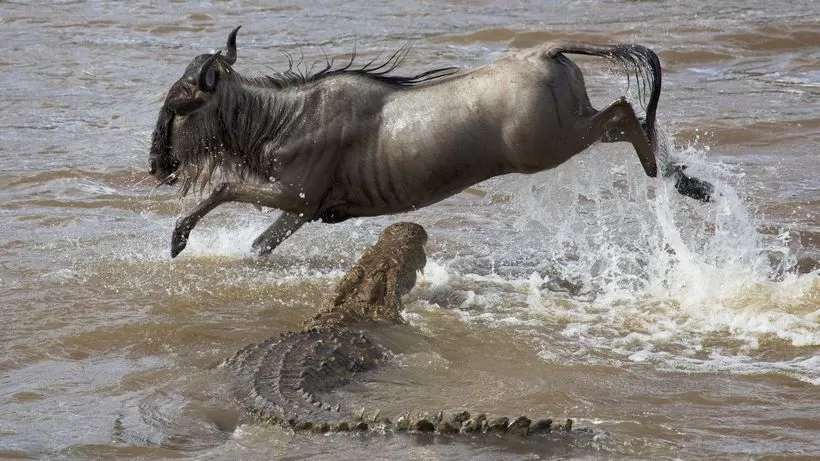
August and September — The peak. This is the classic river-crossing season. The herds are concentrated, crossings happen regularly at the main points along the Mara and Talek rivers, and the predator activity is at its height. If your goal is the iconic crossing shot — dust, splashing water, crocodiles, a wall of wildebeest — these two months are your best odds. Book early; this is when the Mara is busiest.
Photography freezes what the heart refuses to forget.
October — The herds begin drifting back south, but crossings still occur and the light softens as the short rains approach. Vehicle numbers thin out. A strong choice if you want crossing potential with a calmer atmosphere.
November to June — The migration has moved on to the Serengeti and the calving grounds. The Mara is still an exceptional big-cat destination in these months, and resident wildlife photography is superb, but you won't get the river-crossing spectacle. Calving season in the southern Serengeti (around February) is its own remarkable event, but that's a different part of the ecosystem.
Reading the light
The Mara sits close to the equator, which means harsh overhead light by mid-morning and a short, precious golden window at each end of the day. Plan your shooting around the first two hours after sunrise and the last two before sunset. Crossings can happen at any time, but the light between roughly 6:30 and 8:30 in the morning is what turns a documentary shot into a portfolio piece.
Photography freezes what the heart refuses to forget.
Position matters as much as timing. On a crossing, you want the sun behind you or slightly to the side for clean, front-lit detail — but backlight at dawn, with dust and spray catching the sun, can produce something far more dramatic. Know which you're going for before the herd commits, because once a crossing starts you won't have time to reposition.
Gear and settings that survive the chaos
A crossing is fast, dusty, and unpredictable. A few things that consistently make the difference:
Bring reach. A 100-400mm or a 200-600mm covers most situations; a 500mm or 600mm prime helps for distant cats and portraits. A second body with a wider zoom (24-105mm) lets you catch the scale of the herds and the landscape without swapping lenses in the dust.
Photography freezes what the heart refuses to forget.
Shoot shutter-priority or manual with a fast shutter — 1/2000s or faster freezes leaping wildebeest and splashing water. Open up to a wide aperture for single-subject portraits and stop down a little when you want a line of animals sharp front to back. Don't be afraid to push ISO; a slightly grainy sharp frame beats a clean blurry one every time.
Keep your card empty and your battery full before a crossing starts. They can last thirty seconds or thirty minutes, and the one time you're changing a card is the one time the leopard walks out.
Beyond the crossings
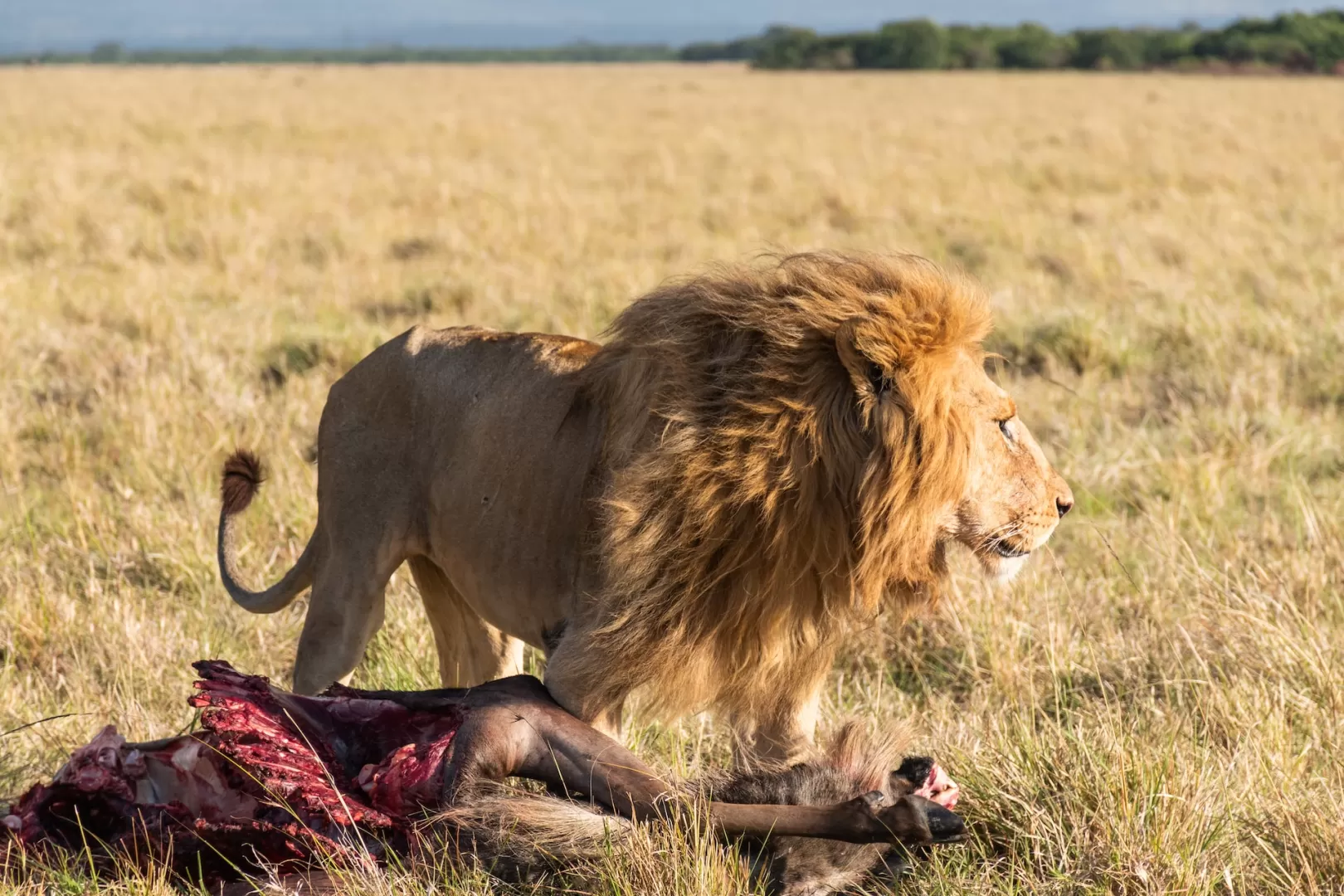
It's easy to fixate on the river, but some of the Mara's best photography happens away from it. Early-morning lions on a kill, cheetah on a termite mound scanning for prey, hot-air balloons drifting over the plains at dawn, and the endless columns of wildebeest snaking across the grassland all make for powerful storytelling frames. Build your days around variety, not just the crossing — you'll come home with a far richer set.
Photography freezes what the heart refuses to forget.
Planning your trip
The migration rewards people who plan around the calendar, book the right camps, and travel with someone who knows where the herds are moving day to day. If you're serious about coming home with river-crossing and big-cat images rather than hoping to get lucky, a guided small-group photography expedition is the difference-maker — you get positioned in the right place at the right hour, with time and patience built into the itinerary rather than a rushed game drive.
I run small-group wildlife photography tours to the Masai Mara built specifically around the migration season and the light, with hands-on mentorship in the field so you leave a better photographer than you arrived. If the Great Migration is on your list, the crossing window fills fast — plan ahead, and let's get you there for the season that matters.
Photograph This in the Wild
Ready to capture these moments yourself? Explore the destinations featured in this story and join a small-group photography expedition led by Sreejith.
Written by Sreejith
Exploring landscapes, wildlife, and untold stories through the lens.